Solar PV Installation
Solar PV Installationin Leeds: MCS Registered,Designed for Your Roof
MCS-registered solar PV design and installation for homes and commercial roofs, sized against your actual consumption rather than the roof area, fully tested, certified and installed by the same electricians who maintain the installation behind it.
MCS registered · NAPIT registered · 4.9 from 105 Google reviews
- MCS
- Registered installer
- NAPIT
- Registered and independently assessed
- 17 years
- In the electrical trade
- Insured
- Fully insured: details on request
- 4.9 / 5
- From 105 Google reviews
Service overview
Solar PV installation
What it is
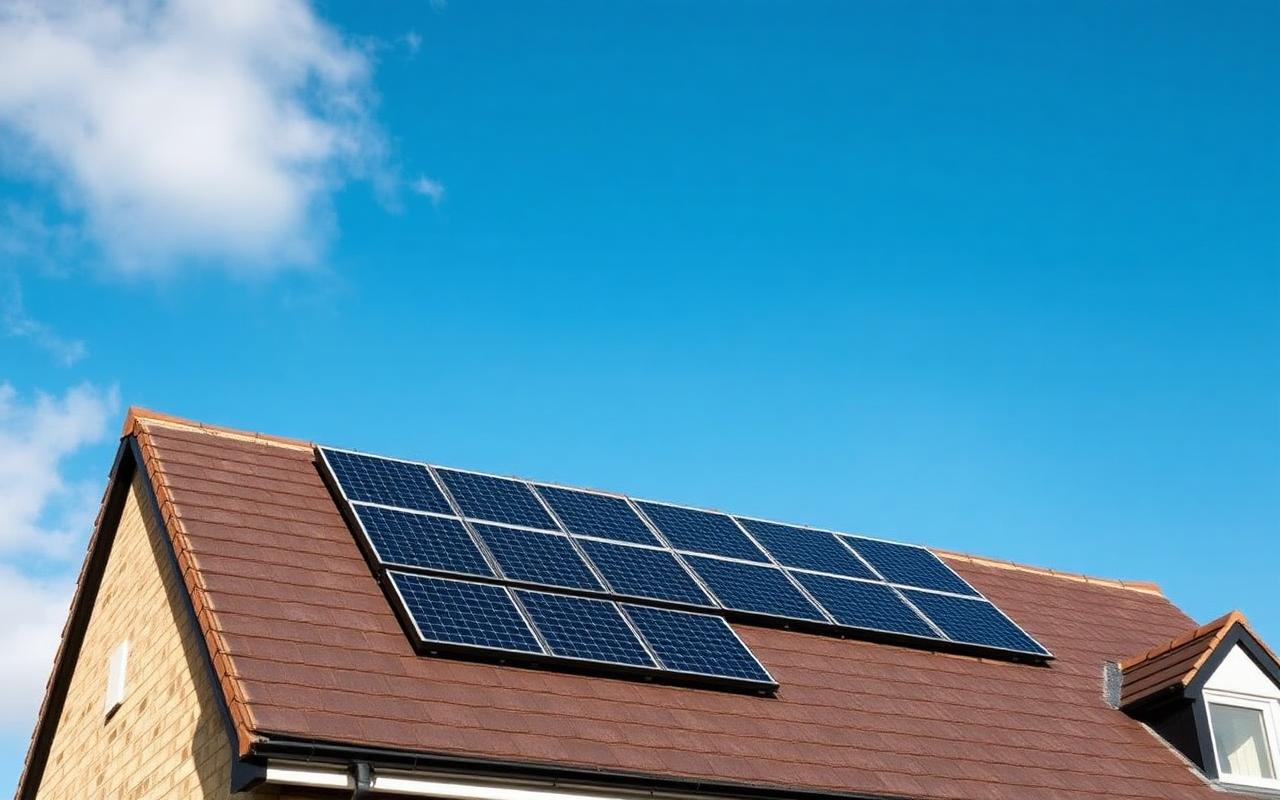
A solar PV installation converts daylight into electricity your building uses first, exporting the surplus. The system comprises roof-mounted panels on a mounting system fixed to the structure, DC cabling and isolation, an inverter converting DC to AC, protection and metering, and the connection into your consumer unit or distribution board.
The design work is what determines the return: roof orientation and pitch, shading through the day and across the year, structural capacity, panel and inverter selection, string layout, and, most importantly, sizing against your actual consumption pattern rather than filling the available area.
Every installation is electrically tested and certified, MCS-registered documentation issued, and the distribution network operator notified as required.
Who it is for
Homeowners looking to reduce electricity costs and increase self-consumption, particularly with an EV or heat pump.
Landlords and developers adding generation to properties where running costs affect lettability.
Businesses with daytime demand, offices, workshops, warehouses, retail, where generation lines up naturally with load.
Sites with existing EV charging or significant daytime plant, where generation can serve those loads directly.
When you need it
When a roof is being replaced or repaired, because installing at the same time avoids paying twice for scaffolding and access.
Before or alongside an EV charge point installation, since charging and generation interact.
When a consumer unit or distribution board upgrade is already planned.
When daytime electricity consumption is high and rising, which is where self-consumption pays best.
Why it matters
Solar's return depends almost entirely on how much of the generation you use yourself rather than export. A system sized to a roof rather than to a consumption profile generates plenty at midday when nobody is in and leaves you buying at peak rate in the evening. Getting the sizing right is worth more than any premium panel choice.
Installation quality determines whether the system lasts its design life. Roof penetrations and mounting must be weathertight and structurally sound; DC cabling must be protected, correctly rated and properly isolated; and the AC side must be integrated into an installation that can actually take it. DC faults on poorly installed systems are a known fire risk, which is why the electrical detail matters more than the panel brand.
We are MCS registered and NAPIT registered, and we are electricians first: the same firm that inspects, tests and maintains installations across Yorkshire. The AC side of a solar installation is ordinary electrical work done to a high standard, and that is precisely where corner-cutting installers are weakest.
The cost of leaving it
What happens when solar pv installation is put off
The most common disappointment with solar is not technical failure, it is a system that never earns what the sales figure promised. Oversized against consumption, undersized against a heat pump and an EV, or laid out across a shaded roof section where one panel's shading drags a whole string down: all of which are design decisions made before anyone climbs a ladder.
Installation defects show up later and cost more. Poorly sealed roof penetrations leak into the structure, and the damage is discovered as staining on a ceiling two winters later. Unsupported DC cabling chafes against roof structure until insulation fails, and DC arcing faults do not self-extinguish the way AC faults do, which is why DC-side workmanship is the single most safety-critical part of a solar installation.
Then there is the paperwork position. Without MCS-registered documentation and correct notification to the network operator, you can find yourself unable to access export arrangements, facing questions during a property sale, and holding a system whose warranty position is unclear. Retrofitting that documentation after an unregistered installation is difficult and sometimes impossible.
Mistakes we are called in to correct
- Sizing the array to the roof instead of to the consumption profile, which maximises export at the lowest value rather than self-consumption at the highest.
- Ignoring shading from chimneys, dormers, trees and neighbouring buildings across the whole year rather than at the time of the survey.
- Adding generation to a consumer unit that has no capacity or suitable protection for it.
- Choosing on headline price when the difference is in mounting quality, DC workmanship and design competence.
- Deferring battery storage decisions entirely, when leaving provision at installation is far cheaper than retrofitting later.
Our process
How we deliver solar pv installation
- Step 1
Consumption and roof survey
We look at your actual usage pattern and your roof: orientation, pitch, structure, shading through the day and the year, and the condition of the covering, because installing onto a roof near the end of its life is a false economy.
- Step 2
System design and proposal
Array layout, panel and inverter selection, string configuration, and sizing against self-consumption, with a clear explanation of what the system will generate and where the value comes from, plus provision for battery storage if it is on your horizon.
- Step 3
Installation
Mounting system fixed and weathersealed correctly, panels installed, DC cabling routed, supported and protected, inverter positioned for ventilation and access, and the AC connection made into a board that can take it.
- Step 4
Testing, commissioning and notification
The installation is electrically tested and certified, the system commissioned and monitoring configured, and the distribution network operator notified as required.
- Step 5
Handover, documentation and aftercare
You receive MCS documentation, electrical certification and a walkthrough of the monitoring, and the same team remains available for the electrical maintenance of the property afterwards.
Benefits
What you get from working with us
Sized to what you actually use
Design driven by your consumption profile, so generation offsets what you buy instead of exporting at the lowest available value.
MCS-registered documentation
The certification needed for export arrangements, property sales and warranty positions: issued at handover, not chased afterwards.
Electrical work done to testing standards
The AC side installed and certified by NAPIT-registered engineers who inspect and test installations for a living.
DC workmanship that lasts
Cabling supported, protected and correctly rated, with proper isolation: the detail that determines both longevity and fire safety.
Roof integrity protected
Mounting and penetrations installed weathertight, with an honest assessment of roof condition before anything is fixed to it.
Ready for storage and EV
Provision designed in for battery storage and charge points, so the next step is an addition rather than a rebuild.
In detail
Solar PV Installation explained in full
What determines generation on your roof
Orientation and pitch set the theoretical maximum: south-facing at a moderate pitch is optimum in the UK, but east-west arrays spread generation across the morning and evening, which often suits a household's actual demand better than a midday peak. Roof pitch, panel efficiency and array area then set the installed capacity.
Shading is the factor most often underestimated. A chimney, dormer, aerial, tree or neighbouring building casts different shadows in December than in June, and on a conventional string inverter, shading one panel affects the whole string. Optimisers or microinverters mitigate this at additional cost, and are worth specifying only where the shading analysis justifies them, which is a design decision, not a default upsell.
Inverters, strings and system architecture
A string inverter is the simplest and usually most cost-effective arrangement: panels wired in series into a single inverter, ideal for unshaded roofs of consistent orientation. Hybrid inverters add battery connectivity, which is the sensible choice where storage is planned even if it is not being installed on day one.
Power optimisers add per-panel maximum power point tracking while keeping a central inverter, useful for partially shaded or multi-orientation roofs. Microinverters put conversion at each panel, maximising output on complex roofs and simplifying panel-level monitoring, at higher cost and with more units at roof level. Which architecture is right follows from the shading and orientation analysis rather than from preference.
Domestic and commercial installations
Domestic installations are typically single-phase, roof-mounted on tile or slate, with the array sized against a household profile that peaks morning and evening. Self-consumption is the lever, which is why solar, battery storage, EV charging and time-of-use tariffs are increasingly designed together rather than as separate purchases.
Commercial installations are usually larger, often three-phase, and frequently on flat or profiled metal roofs where ballasted or purpose-made mounting systems apply. The economics are generally better because demand is daytime and aligns naturally with generation. Structural loading assessment matters more, network operator requirements are more involved at larger capacities, and the interaction with existing distribution, EV charging and site load management becomes part of the design rather than an afterthought.
Ongoing performance and maintenance
Solar PV needs little intervention, but it is not fit-and-forget. Monitoring should be checked so a failed string or inverter fault is noticed in weeks rather than at the next annual bill. Inverters are the component most likely to need replacement within the system's life, and access for that should be considered at installation rather than after.
The DC and AC sides are also part of your fixed installation, so they fall within the scope of periodic inspection and testing. Because we carry out EICRs, fixed wire testing and thermal imaging, the solar installation is inspected as part of the same regime rather than being a system nobody has looked at since commissioning.
FAQs
Solar PV Installation: common questions
How much does solar PV cost?
+It depends on array size, roof type and access, inverter architecture and whether battery storage is included. We survey the roof and your consumption first and quote against a specific design, free and with no obligation, rather than quote a rate per kW that ignores your roof. BACS and all major cards accepted.
How long does installation take?
+A typical domestic installation is a small number of days including scaffolding, testing and commissioning. Commercial roofs take longer and are planned around site access and operations. We confirm the timeline with the design proposal.
Will solar work on a north-facing or shaded roof?
+Partially. Orientation and shading materially affect output, and we model both across the year before recommending anything. Where shading is significant, optimisers or microinverters can recover much of the loss, and where the numbers genuinely do not work, we will tell you rather than sell you a system.
How long do solar panels last?
+Panels are long-life components with output declining gradually over decades rather than failing outright, and mounting systems are specified for the same duration. Inverters are the component most likely to need replacement within the system's life, which is why access and ventilation are part of the design.
Do I need a new consumer unit?
+Sometimes. Generation needs a suitable protected connection, and older boards frequently lack the capacity or protection for it. We assess the board at survey and include any necessary work in the quote rather than discovering it on installation day.
What certification do I receive?
+MCS-registered documentation for the installation plus electrical certification for the AC works, and we handle the required notification to your distribution network operator. Keep both; they are asked for on export arrangements and property sales.
Should I add battery storage at the same time?
+It depends on your consumption pattern and tariff, but even if you are not installing storage now, designing provision for it at installation is far cheaper than retrofitting. We will set out both options with the design.
Do you install on commercial roofs?
+Yes: flat and profiled metal commercial roofs, three-phase connections, and designs that account for existing site load, EV charging and distribution capacity. Daytime demand generally makes commercial economics stronger than domestic.
Which areas do you cover?
+Leeds, Wakefield, Harrogate, York, Doncaster, Sheffield, Hull and Manchester from our base in Leeds. Call 0113 418 2086 to arrange a roof and consumption survey.
Accreditations
Independently assessed,
not self-certified
NAPIT registered, CHAS accredited, SafeContractor approved and MCS registered. City & Guilds 2391 Inspection & Testing and 18th Edition held. Fully insured: details available on request.


Get a solar design sized to your consumption, not your roof
Tell us the property and roughly what you use. We will survey, model the shading, and quote a system that offsets what you actually buy.
Reviews
Rated 4.9 out of 5
by 105 local clients
Landlords, homeowners, letting agents, offices and industrial sites. Read them in full on Google.
“Harry is reliable, trustworthy and professional. He knows what he is doing and keeps records of the work that he has done and always responds in a timely manner.”
“I needed an EICR on my rental property and Pyramid were there the next day. I cannot recommend these guys enough. 5 stars isn't enough!”
“Harry even went the extra mile and worked on a Sunday at no additional charge at late notice to complete the work as we needed the EICR to complete our mortgage. Very quick turnaround from initial contact, through to survey, through to remedial works being completed.”
“Called Harry after being let down by another company who failed to show up. Came round within an hour as promised. The work was carried out to a very high standard and the price was very reasonable.”
“I recommend Harry and his team to all my clients for any electrical needs. My clients always compliment him on his work each time and how reliable he has been.”
“I sought 2 other quotes from other reputable businesses, however, I found Harry's quote to be the most competitive. His pricing was transparent and I would not hesitate to recommend Pyramid Services to others.”
“We have used Harry and Joe numerous times over several years, for different size projects, both inside and outside. They have converted all our offices to LED lighting.”
Request a quote
Book your electrical testing
with one accountable specialist
Tell us the premises and what you need certified. We will confirm scope and give you a free, no-obligation quote, then test, certify and put right anything that fails.
- Call
- 0113 418 2086
- Address
- Ste 1, Regent, Regent St, Leeds LS9 7RD