
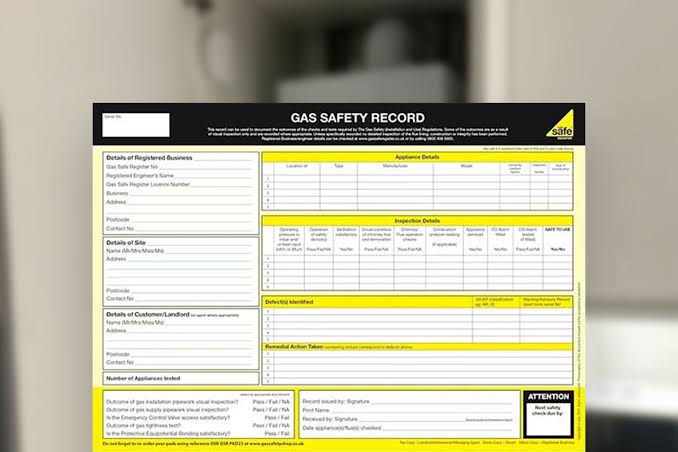
Landlord Certificates
Landlord Electrical SafetyCertificates in Leeds:Tested, Certified, Tenant-Ready
Compliant electrical safety certification for single lets and full portfolios, arranged around your tenants, with any failures corrected by our own engineers so you finish with a satisfactory report rather than a list of problems.
Next-day attendance when it is urgent · NAPIT registered · 4.9 from 105 reviews
- NAPIT
- Registered and independently assessed
- Portfolio
- Single lets to multi-property landlords
- In-house
- Remedials and re-certification
- 17 years
- In the electrical trade
- 4.9 / 5
- From 105 Google reviews
Service overview
Landlord electrical safety certificates
What it is
A landlord electrical safety certificate is an Electrical Installation Condition Report on a rented property: a full inspection and test of the fixed installation, with every defect coded by severity and a clear statement of whether the installation is satisfactory for continued use.
For rented dwellings in England, the report must be obtained at intervals of no more than five years, a copy supplied to tenants and to new tenants before occupation, and a copy provided to the local authority within seven days of a request. Where the report identifies work as required or as further investigation, that work must be carried out within 28 days, or sooner if the report specifies it, and written confirmation supplied to the tenant and the local authority.
The practical output is therefore two things: a satisfactory report, and the evidence trail showing you obtained it, acted on it and distributed it.
Who it is for
Private landlords with a single rented property who need certification before a tenancy starts.
Portfolio landlords who need multiple properties tested on a rolling schedule with consistent documentation.
Letting and managing agents coordinating certification across a managed book, often to tight void-period deadlines.
HMO landlords and operators with communal areas, additional detection requirements and licensing conditions.
Landlords who have received an unsatisfactory report from another contractor and need the remedials completed and the property re-certified.
When you need it
Before a new tenancy begins, so the report can be supplied to the tenant before occupation.
At least every five years, or sooner if the previous report specified a shorter interval.
When the local authority has requested a copy and you do not hold a current one.
After any electrical alteration, extension, new consumer unit or works by another trade.
Where the previous report was unsatisfactory and the 28-day remedial window is running.
Why it matters
The consequences of getting this wrong sit entirely with the landlord. Local authorities have enforcement powers including remedial notices and financial penalties, and where urgent works are needed the authority can arrange them and recover the cost. Insurance and any dispute after an incident will also turn on whether current certification was in place.
The other risk is a certificate that does not stand up. A report produced quickly, with sampled circuits and blank test results, may look fine in a file until it is examined, and a landlord relying on it is exposed by paperwork they paid for. Every report we issue carries measured values against every circuit tested.
Speed matters in this work in a way it does not elsewhere, because void periods and tenancy start dates are fixed. We take that seriously: our reviews include a landlord who needed an EICR on a rental property and had us there the next day, and a client whose remedial works were completed on a Sunday at no additional charge to hit a mortgage completion.
The cost of leaving it
What happens when landlord certificates is put off
The typical failure pattern for a landlord is not a dramatic one; it is a deadline. A tenancy start date is confirmed, the certificate is left until the fortnight before, the report comes back unsatisfactory with C2 observations on the socket circuits and no RCD protection at the board, and suddenly the property needs a consumer unit change and remedial works inside a window that has already closed. Void periods cost money every day they run.
Then there is the enforcement exposure. Failure to hold and supply a current report is a straightforward breach for the local authority to establish, and remedial notices arrive with fixed deadlines and the possibility of financial penalties. Where an authority carries out urgent remedial action itself, the costs come back to the landlord, with none of the control over who does the work or how much it costs.
The most expensive route of all is the unsatisfactory report you do nothing with. It is a dated, written record that you were told the installation was potentially dangerous. If an incident follows, that document exists, and it is far more damaging than never having had the property inspected. Getting the remedials done is not optional housekeeping; it is the whole point of the exercise.
Mistakes we are called in to correct
- Booking certification in the week a tenancy starts, leaving no margin for remedials that would have been routine with a month's notice.
- Using the cheapest fixed-price provider without checking whether the report will carry measured results for every circuit.
- Filing an unsatisfactory report without completing the required works or providing written confirmation to the tenant and the authority.
- Assuming a recently built or recently rewired property cannot fail, later alterations by other trades are a common source of observations.
- Testing a property but forgetting the appliances supplied with it, or the communal areas in a block or HMO.
Our process
How we deliver landlord certificates
- Step 1
Property details and booking
We take the property type, size, approximate age and consumer unit arrangement, quote against that scope, and arrange access with you, the tenant or the agent at a time that suits the tenancy.
- Step 2
Inspection of the installation
Consumer unit, earthing and bonding, accessories, visible cabling and protective devices are examined for damage, deterioration and departures from the current wiring regulations.
- Step 3
Full circuit testing
Continuity, insulation resistance, polarity, earth fault loop impedance and RCD operation are tested and the measured values recorded against every circuit: the evidence that makes the report defensible.
- Step 4
Report, coding and distribution
You receive the report with each observation coded C1, C2, C3 or FI, explained in plain English with photographs, ready to supply to your tenant, agent or local authority.
- Step 5
Remedials within the window and re-certification
Where work is required, we quote it, complete it with our own engineers inside the 28-day requirement, and issue the written confirmation and updated certification you need to close the loop.
Benefits
What you get from working with us
Compliance closed out, not started
Testing, remedial works and re-certification under one contractor, so you end with a satisfactory report and the written confirmation to distribute.
Void periods protected
Certification and remedials scheduled around tenancy dates, with urgent attendance where a deadline is already tight.
Documentation that stands up
Measured test results for every circuit, coded observations and photographs: the report an authority or insurer can actually scrutinise.
Portfolios on a rolling schedule
Multiple properties diarised across the year so certificates never lapse and costs stay predictable rather than arriving all at once.
Tenant-friendly attendance
Appointments arranged directly with tenants where you prefer, with clear communication about what access and time is needed.
Second opinions on failed reports
We review unsatisfactory reports from other contractors, confirm what genuinely needs doing, complete it and re-certify.
In detail
Landlord Certificates explained in full
What the regulations actually require of a landlord
For privately rented dwellings in England, the requirements are specific: ensure the electrical installation is inspected and tested by a qualified person at intervals of no more than five years; obtain a report of the results; supply a copy to each existing tenant within 28 days, to a new tenant before occupation, and to any prospective tenant on request within 28 days; and supply a copy to the local housing authority within seven days of a request.
Where the report identifies remedial or further investigative work, that work must be completed within 28 days, or within the shorter period specified in the report, and written confirmation from the electrician must be supplied to the tenant and the local authority. Duties differ across the UK nations, and HMOs and licensed properties can carry additional conditions through the licence itself; we will tell you plainly what applies to your property when we quote.
Common failures in rented properties
Older rented stock fails most often on the same handful of items: no RCD protection for socket circuits or cables buried in walls, rewireable fuse boards without main switches, missing or undersized main protective bonding to gas and water services, damaged accessories, and DIY alterations: outdoor sockets, garden supplies, shed feeds and kitchen extensions added without protection or proper cabling.
Tenanted properties add wear-related failures: sockets pulled loose from boxes, damaged flexible cables, extractor fans wired into lighting circuits and left seized, and light fittings replaced by tenants without earthing. Kitchen and bathroom alterations are a frequent source of C2 observations because of zone requirements around basins, baths and showers.
Where a property is older and multiple systemic issues appear together, no RCD protection, no bonding, a rewireable board, and rubber-sheathed cabling, a consumer unit change alone will not produce a satisfactory report. In those cases we set out honestly what a rewire or partial rewire would involve rather than take payment for remedials that cannot deliver the outcome.
HMOs, blocks and communal areas
HMOs bring higher occupancy, more circuits in use, licensing conditions, and communal areas whose electrical installation is the landlord's responsibility along with the individual lettings. Fire detection provision is typically more extensive, emergency lighting may be required on escape routes, and licensing inspections will ask for all of it together.
Blocks of flats separate landlord's supply and communal distribution from individual dwellings. Certification needs to cover the landlord's installation, risers, communal lighting, entry systems, lifts and plant, as well as the individual flats where those are let. We map that boundary at survey so nothing falls into the gap between the freeholder's contractor and the flat owner's.
Working across a portfolio
For landlords and agents with multiple properties, the efficient approach is a rolling programme rather than reactive booking. We diarise certificates by expiry, group properties geographically to reduce travel, and coordinate access with tenants directly where you would rather not manage it.
Consistent documentation matters at scale. Every property gets the same report format, the same coding discipline and the same evidence quality, so when an authority or a lender asks for a set of certificates you are producing a coherent file rather than assembling paperwork from four different contractors in four different styles.
FAQs
Landlord Certificates: common questions
How much is a landlord electrical safety certificate?
+We quote per property, because the number of circuits, the age of the installation and access all change the work involved. Quotes are free and carry no obligation, portfolios can be priced as a programme, and we accept BACS and all major credit and debit cards.
How often do I need one?
+For a rented dwelling in England, at intervals of no more than five years, or sooner where the report specifies a shorter interval. A copy must go to existing tenants within 28 days, to new tenants before occupation, and to the local authority within seven days of a request.
How quickly can you attend?
+We prioritise deadline-driven work and will tell you honestly what we can do when you call. Our reviews include a landlord who needed an EICR on a rental property and had us there the next day.
What happens if the property fails?
+We explain each C1, C2 and FI observation and quote the remedial work. Our engineers complete it, normally well inside the 28-day requirement, and issue updated certification plus the written confirmation you need to supply to the tenant and the local authority.
How long does the inspection take?
+A typical two- or three-bedroom rental with a single consumer unit is usually a half day, with power isolated in stages rather than off all day. Larger properties and HMOs take longer, and we will tell you the expected duration when we quote so you can brief the tenant.
Do you deal with tenants directly for access?
+Yes, if you prefer. We can arrange the appointment directly with your tenant or agent, explain what access is needed and how long the power will be off, and confirm back to you once it is booked.
Can you certify a whole portfolio on a schedule?
+Yes. We diarise certificates by expiry date, group properties geographically, and keep documentation consistent across the portfolio so nothing lapses and the costs are spread predictably across the year.
Another electrician gave me an unsatisfactory report: can you help?
+Yes, and it is common work for us. We review the coding, confirm what genuinely needs doing, complete the remedials and re-certify the property, so you are not caught between one contractor's report and another's quote.
Which areas do you cover for landlord certificates?
+Leeds, Wakefield, Harrogate, York, Doncaster, Sheffield, Hull and Manchester from our base in Leeds. Call 0113 418 2086 with the postcode and we will confirm coverage and availability.
Accreditations
Independently assessed,
not self-certified
NAPIT registered, CHAS accredited, SafeContractor approved and MCS registered. City & Guilds 2391 Inspection & Testing and 18th Edition held. Fully insured: details available on request.



Get the certificate, and the remedials, done before the tenancy starts
Give us the property and the date you need it by. We will test properly, put right anything that fails, and hand you a satisfactory report you can supply straight to your tenant.
Reviews
Rated 4.9 out of 5
by 105 local clients
Landlords, homeowners, letting agents, offices and industrial sites. Read them in full on Google.
“Harry is reliable, trustworthy and professional. He knows what he is doing and keeps records of the work that he has done and always responds in a timely manner.”
“I needed an EICR on my rental property and Pyramid were there the next day. I cannot recommend these guys enough. 5 stars isn't enough!”
“Harry even went the extra mile and worked on a Sunday at no additional charge at late notice to complete the work as we needed the EICR to complete our mortgage. Very quick turnaround from initial contact, through to survey, through to remedial works being completed.”
“Called Harry after being let down by another company who failed to show up. Came round within an hour as promised. The work was carried out to a very high standard and the price was very reasonable.”
“I recommend Harry and his team to all my clients for any electrical needs. My clients always compliment him on his work each time and how reliable he has been.”
“I sought 2 other quotes from other reputable businesses, however, I found Harry's quote to be the most competitive. His pricing was transparent and I would not hesitate to recommend Pyramid Services to others.”
“We have used Harry and Joe numerous times over several years, for different size projects, both inside and outside. They have converted all our offices to LED lighting.”
Request a quote
Book your electrical testing
with one accountable specialist
Tell us the premises and what you need certified. We will confirm scope and give you a free, no-obligation quote, then test, certify and put right anything that fails.
- Call
- 0113 418 2086
- Address
- Ste 1, Regent, Regent St, Leeds LS9 7RD